
Yōkai – The Spirits That May Inhabit Your Home
Introduction
Japan is famous for its ghouls and ghosts; you’ve likely heard of many of the popular ghosts that were prominent during the late 90s and early 2000s with characters such as Sadako in The Ring or the poltergeist in The Grudge. But it’s not all just scary, violent ghosts that are thought to haunt Japanese homes – there is a slightly lighter and comic side of the spiritual world that is often thought to overlap with our own, especially in rural areas that have a rich cultural history surrounding these spirits. In this article, I will introduce to you just a few of the quirky beasts that may be hiding in the shadows – but don’t fret! – they’re not real.
Probably.
Akaname – “Scum Licker”
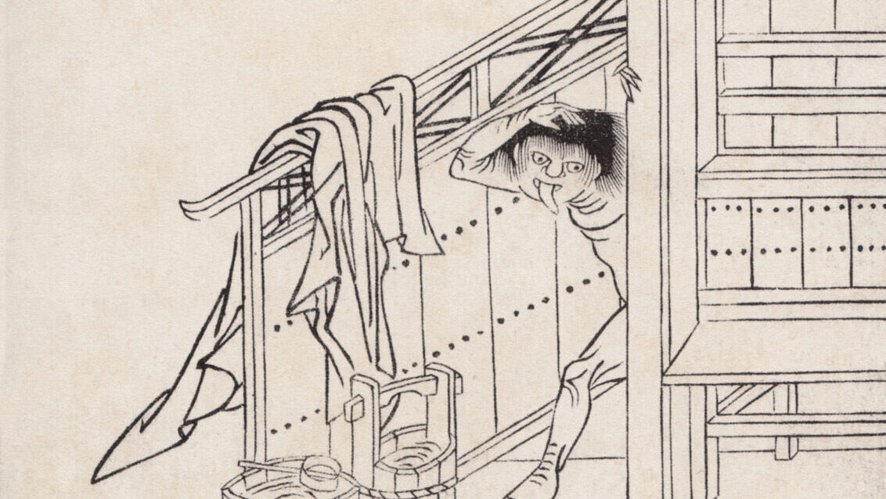
This beast is as disgusting as it sounds and is a sign of how literal the names of these spirits can be. As its name suggests, the Scum Licker is thought to gorge on the residue left on dirty bathtubs, toilets, mould and various other disgusting delicacies. It is said to inhabit abandoned homes that have been left untouched and uncleaned for lengthy periods. It even is thought to crawl along the ceiling to feast on grimy water that may have seeped through the roof during a storm, causing the water stains to strengthen, something that you may witness in older homes. This characteristic reminds me of a one-hundred-year-old home I visited south of Osaka that had footprints on the ceiling! Maybe that was an Akaname having a snack one night? Who knows. So, if you’re thinking of buying an old house out in the countryside, keep an eye out for the Akaname that may be gorging on some old dirt in the bathtub.
Tenjō-name – “Ceiling Licker”
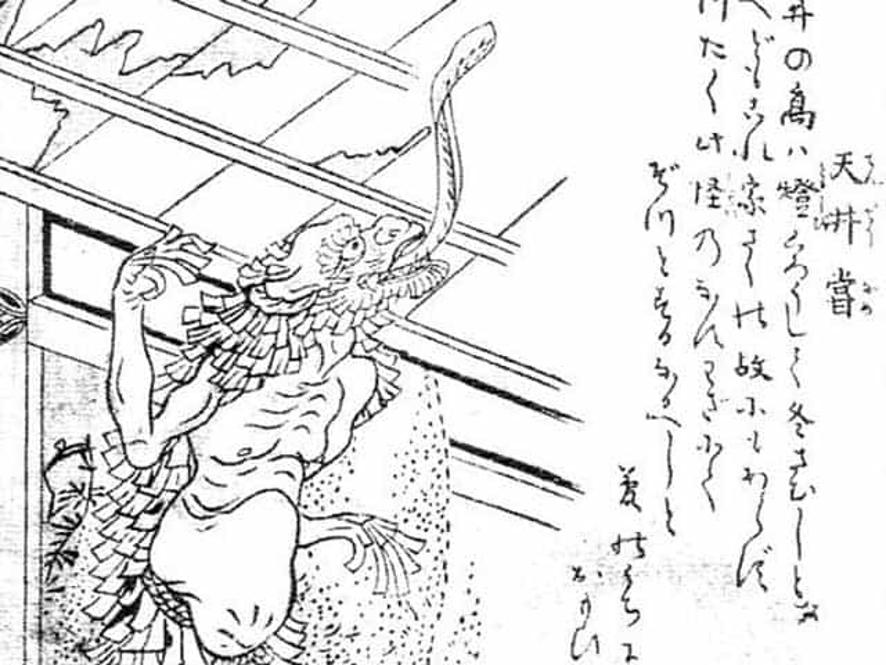
The Tenjō-name, or “ceiling licker,” is a bizarre household yōkai said to inhabit neglected homes, temples, and abandoned buildings. It is typically depicted as a lanky, goblin-like creature with unusually long limbs and an even longer tongue, which it uses to lick ceilings during the night. Homeowners are said to discover its presence only by noticing dark stains or strange marks appearing overhead despite having no obvious cause. Unlike more dangerous yōkai, the Tenjō-name is largely harmless, serving instead as a reminder of neglect and poor maintenance. Its unsettling appearance and peculiar habits reflect a common theme in Japanese folklore: that forgotten corners of the home may become inhabited by strange spirits that thrive where cleanliness and human attention have faded.
Karakasa Kozo – “Umbrella Rascal”
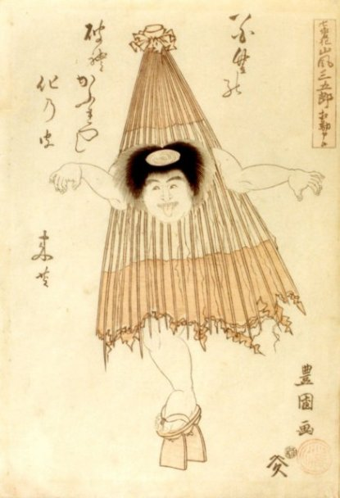
It is believed in Japan that when any item has reached its one hundredth year it gains a spirit and becomes what is called in Japanese “tsukumogami”. These can be any household item, whether it’s a kettle, a chair, a bottle of sake or even an umbrella. One of the most famous ones is the Karakasa Kozo, or “umbrella rascal” as it is loosely translated. During my time looking at properties I have seen plenty of old umbrellas knocking about, which I doubt are as old as a hundred, but you never know what you might find stored away in an old oshi-ire (storage closet) when clearing out your new property. This yōkai is said to surprise people by sneaking up behind them and giving them an oily lick with their comically large tongues, which I think you can agree is pretty gross.
Mokumokuren – “Continuous Eyes”
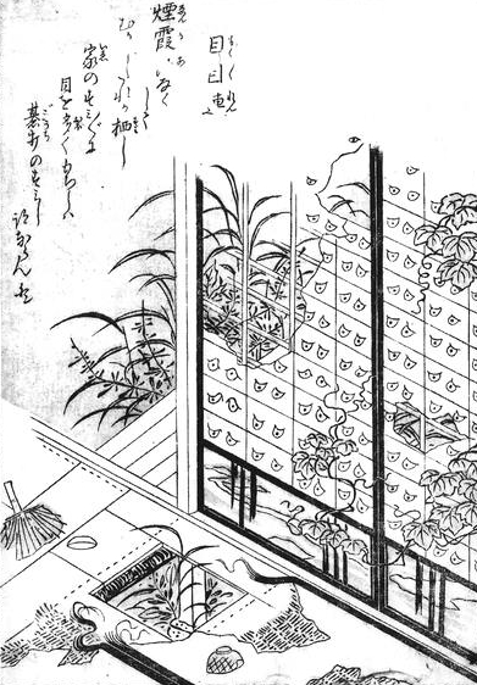
This yōkai, considered to be a creation of the yōkai scholar and yōkai artist Toriyama Sekien, is a creepy spirit that inhabits shoji (the paper sliding doors often leading into a traditional Japanese tatami mat room) in abandoned houses. The story goes that one night a travelling merchant decided to stay in an abandoned house instead of paying for a night at the inn. When he awoke in the night, he found a collection of eyes staring down at him from the shoji, watching him closely. The name Mokumokuren literally means “continuous eyes”, which perfectly encapsulates what this spirit is.
Yanari – “House Groans”
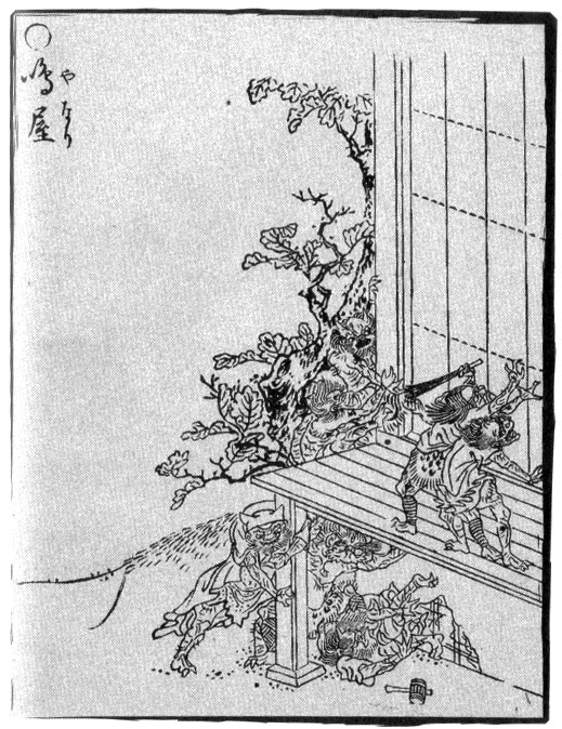
We’ve probably all experienced it. You’re walking through an old house and you start to hear various creaks, thumps and many other kinds of noises that put you slightly off edge. In Japanese folklore, these are known as “Yanari”, or “house groans”. The source of these noises is often left ambiguous, but sometimes attributed to small goblin-like creatures or a type of spirit, perhaps the spirit of the house itself. They are most commonly associated with abandoned and vacant homes and one of the most popular stories tells of a group of ronin who stumbled upon an abandoned home one night. As they slept the house suddenly started to shake and naturally they assumed it was an earthquake until they rushed outside to safety and discovered that it was only the house that was shaking!
Geya Nyūdō – “Monk Under the House”
The Geya Nyūdō is a mysterious yōkai said to live in old wells or in holes beneath traditional Japanese houses. According to folklore, it is a small, smiling, monk-like figure, no bigger than a child, that creeps up through the floorboards when the owners are away and helps itself to whatever food is in the house. Homeowners usually notice only the aftermath, such as unwashed pots and dishes and scraps of food left behind, and often suspect a burglar or a nosy neighbour. Although the Geya Nyūdō is not hostile and does not bring bad luck, it embodies the uncanny feeling that familiar architecture can conceal something unseen just beneath your feet. Unfortunately, I was unable to find a reliable image of the Geya Nyūdō, so I’ll need to leave this one to your imagination!
Zashiki-warashi – “Parlour Child”
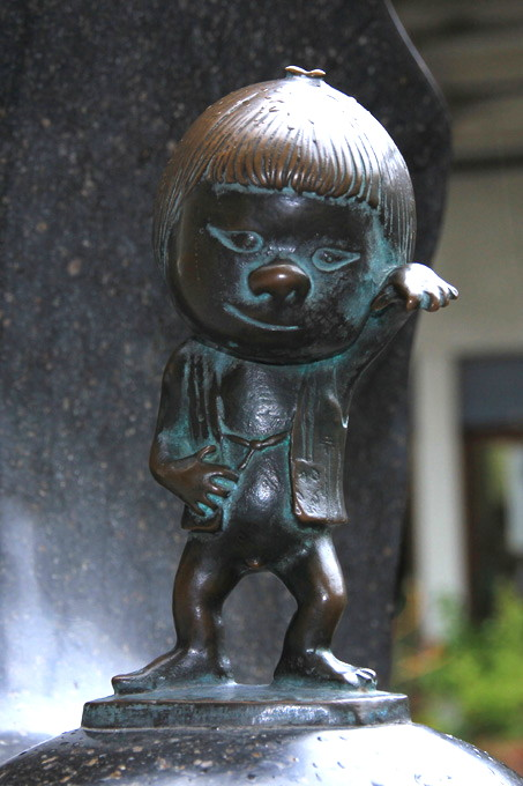
The Zashiki-warashi is a child-like household spirit said to dwell within the tatami rooms and hidden corners of old Japanese homes, particularly in the Tōhoku region. Unlike many yōkai, it is regarded as a benevolent presence whose residence brings prosperity, good fortune, and happiness to the household. The spirit is often described as appearing as a young child dressed in traditional clothing, occasionally glimpsed out of the corner of one’s eye or heard laughing, running through hallways, or playing when no children are present. While generally harmless, the Zashiki-warashi is known for playful mischief, such as moving small objects or creating mysterious sounds. Folklore warns that when the spirit abandons a home, the family may suffer financial hardship or decline, making its presence a treasured sign of blessing and protection rather than fear.
And there we have it. A list of just some of the yōkai spirits, ghouls and ghosts that may just be hiding somewhere in your property just waiting for you to leave. Which of these yokai caught your imagination? Let us know if you have any spooky stories to share!